There’s a stretch of time in March when Rochester’s unrelenting winter feels intractable—when the view out my back window is defined by mountains of gunmetal snow and grimy ice that appear to have become permanent fixtures of the landscape.
Then, a thaw begins to take hold. Gray skies give way to stretches of blue while patches of snow recede first from the edges of structures and then from the base of trees. It feels as if the season might finally be turning. Without warning, skies darken, the air grows heavy, and a fresh layer of white blankets our optimism. What felt like a vernal awakening proves to be illusory.
Over the past 30 days, something similar has taken place in the housing market. By late February, the conditions for a genuine spring market were aligning. Mortgage rates had dropped to 5.98%. Inventory was beginning its seasonal climb, rising from roughly 310 homes in January and February to 335 following the President’s Day holiday. For the first time in months, both the cost of borrowing and the availability of homes were moving in the right direction simultaneously. The early conditions for a spring market were in place.
Then, less than 48 hours after interest rates dropped below 6%, the United States fired missiles into Iran, and financial markets reacted immediately. The White House assured Americans this would be a short-term conflict and the financial rout abated. However, as days passed, investors became dubious:
- Oil surged past $110 per barrel
- Inflation expectations moved higher
- Consumer confidence plummeted
- The yield on the 10-year Treasury rose
- Mortgage rates, which follow the 10-year Treasury, climbed to 6.64%
For a housing market already operating without a cushion, the timing in Rochester could not have been worse. Long before the first missile was fired, inventory was already critically constrained—measured in the low hundreds, not thousands. The average property was selling in eight days. More than two-thirds of homes were closing above asking price. New construction was filling only a fraction of local demand, far below national norms. These conditions defined the market before the war began. They continue to define it now.
But the more meaningful shift isn’t found in inventory figures or days on market. It’s found in confidence. The American economy was already softening before the first strike. The most recent employment report showed a loss of 92,000 jobs in February. Core Personal Consumption Expenditures—the Federal Reserve’s preferred measure of inflation—had risen to 2.8%, moving in the wrong direction at precisely the wrong moment. Consumer sentiment has now fallen to the second percentile of all historical readings—below where it stood at the onset of every recession since the index began.
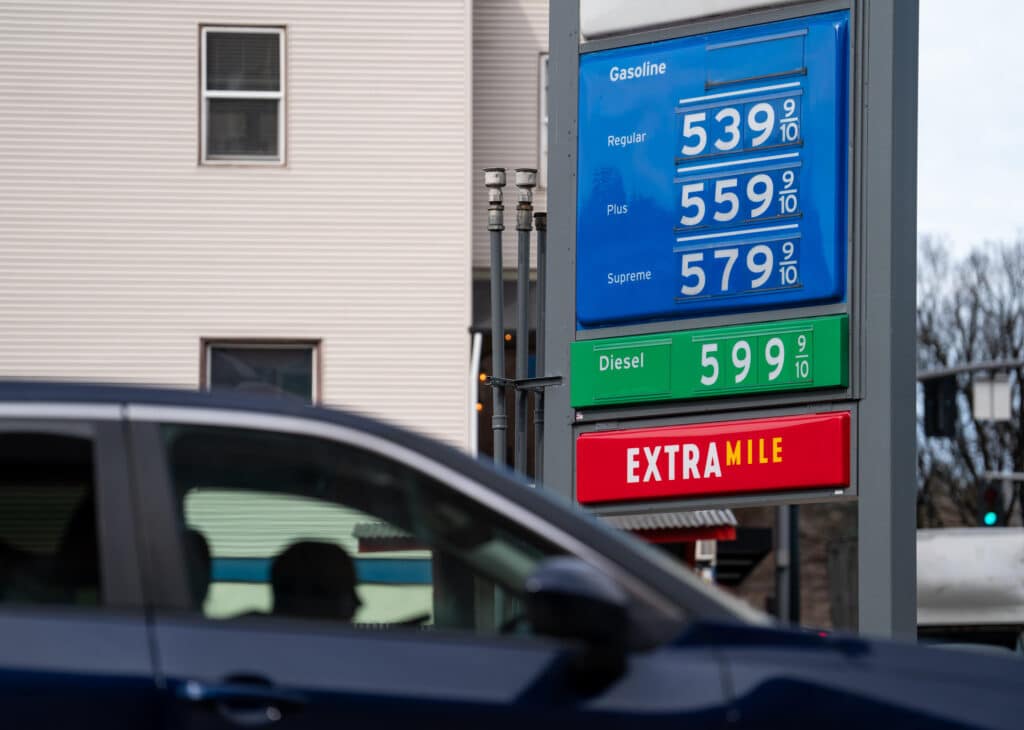
Rochesterians had been feeling it for months. It shows up in small moments over ice cream along the Erie Canal. It shows up at the gas pump and in the checkout line at Wegmans. And housing is downstream of all of this.
What makes this moment particularly stubborn is that higher borrowing costs don’t simply sideline buyers. They freeze sellers too. Homeowners who locked in rates of 2% and 3% have every reason to stay put, and little incentive to trade that mortgage for today’s 6.64%. Rising rates don’t unlock inventory in Rochester. They compound the shortage that was already there.
The result is a market that didn’t weaken so much as it became more discriminating. The best homes—well-prepared, well-located, appropriately priced—continue to attract immediate competition and strong pricing. Everything else is facing a different reality. These are the properties that sit for weeks without a bidding war, that linger past the point of optimism, and that ultimately sell below list price. The uniformity that defined the past several years is giving way to dispersion. This is no longer a market where three walls and a roof guarantee multiple offers. Execution matters now—preparation, pricing, and presentation carry weight they simply haven’t in years.
And yet, Rochester’s underlying position remains among the most resilient in the country. Realtor.com ranked Rochester the #2 housing market in the United States for 2026—and VeroFORECAST continues to identify markets like this one as among the most durable when volatility arrives. Chronically undersupplied, affordably priced relative to local incomes, driven by necessity rather than speculation—this market never overheated the way others did. It simply never had enough homes.
Volatility changes how a market feels. Scarcity determines how it behaves. Those are different things, and in Rochester, only one of them has been present for a decade. The shortage of homes predates this conflict, this rate environment, and this moment of uncertainty. It will outlast all three.
The view out my back window has changed. The lawn, as it descends toward Allens Creek, is now visible and the first crocuses have appeared along the bank. The skies remain a foreboding grey—that particular unease that defines this stretch of the calendar. What changed over the past 30 days wasn’t the structure of the market — it was our confidence in interpreting it. But I’ve stood gazing outward through enough Rochester springs to know what follows. The crocuses are never wrong.
If you have any questions or concerns about real estate, please don’t hesitate to reach out.
 Call me at (585) 330-8750
 Email me at mark@elysianhomesny.com
 Visit us at elysianhomesny.com